Wall Painting in Restaurants and Cafés — How It Works for Business

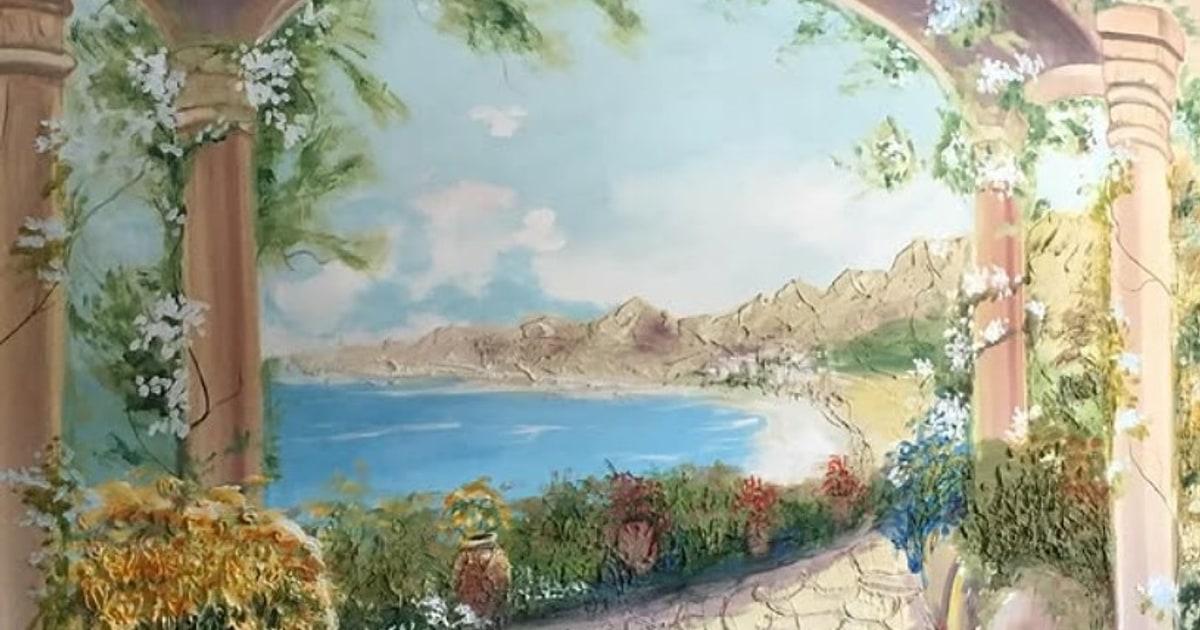
Table of contents
A venue competes on more than its kitchen. Guests choose where they want to sit, where the evening feels good, and where they feel like taking a photo. Wall painting solves both: it creates atmosphere and gives people a reason to take a picture that goes onto social media tagged with your venue.
I've worked with restaurants, lounge areas, sports clubs and offices. Below is what the process looks like from a business perspective: what gets decided at the start, how work proceeds in an open venue, and what to look for when choosing an artist.
What Wall Painting Gives a Venue
Recognisability. An interior with its own painting isn't mistaken for a chain. Guests remember not "the café on the corner" but "the place with the sea wall."
Free marketing. People photograph themselves against the painting and post it tagged with the venue. One good wall generates a stream of user content for years — with no advertising budget.
Zoning without partitions. Painting divides space visually: the lounge area reads differently from the main room, the children's corner is instantly legible, the bar gets an accent.
Working with geometry. A low ceiling can be lifted with a vertical composition. A narrow room — widened with a perspectival subject. A blank windowless wall — turned into a view.
Economics. Painting 20 m² is comparable in budget to good furniture for one zone, but it lasts longer and doesn't go out of fashion as quickly as décor.
How the Subject Is Chosen
The subject doesn't come out of nowhere — it follows the venue's concept.
From the kitchen. An Italian restaurant — Mediterranean motifs, terracotta, vineyards. An Asian venue — its own graphic language, its own colours. The subject reinforces what guests have already sensed from the menu.
From the name and story. If the place has a history — it can become the subject. The name, a symbol, a reference to the district or to what was in the building before.
From the atmosphere. Sometimes mood matters more than a literal subject. "We want it calm and warm" is already a brief: a muted palette, soft forms, no aggressive graphics.
From the zone's purpose. In a room for large groups — a dynamic subject. In a space for two — an intimate one. In a children's zone — its own language.
I always ask to hear about the venue before proposing ideas: concept, audience, average spend, what's already in the interior. The painting should fit in, not argue with its surroundings.
Materials for a Venue — What Matters
A public space places demands that a home doesn't.
Cleaning. Walls in a dining room are wiped regularly, especially at hand height and next to tables. The painting is coated with a protective varnish — matt or satin, so it doesn't glare under the lights. After that the surface can be cleaned without harming the painting.
Wear. Areas near walkways, beside the bar, next to banquettes wear faster. There you need a tougher varnish, and sometimes a considered composition where the lower portion is less detailed and easier to touch up locally.
Moisture. The kitchen area, washrooms, rooms without good ventilation — these need systems resistant to moisture and temperature swings.
Fire regulations. In some countries and room types there are requirements for finishing materials. Check with your designer — I work with materials certified for public spaces, but the standards are worth verifying before work begins.
Light. How the painting looks is decided by the lighting. Warm light strengthens ochre and red tones, cool light the blues and greens. I always ask what lighting is in the room and choose the palette to suit. If the lighting isn't installed yet — we agree on it at the sketch stage.
Working in an Open Venue
The ideal is to paint before opening, during the fit-out. More often the venue is already trading, and nobody is prepared to close for a week.
How that's handled:
Working at night or on a closing day. I come after service, work through the night, and by opening the area is cleared. Slower on the calendar, but the venue loses no revenue.
Zoning. The wall being painted is screened off with a partition or sheeting, and the room operates in the remaining space. Suitable for large venues.
In stages. The wall is divided into sections, each closed off for a day or two. It takes longer, but guests barely notice.
What I need from the venue: access to water and electricity, the ability to leave materials on site, covered furniture in the working area. Acrylic paints have almost no smell — working next to a kitchen is fine.
Timelines and Cost
Timelines. A wall of 20–25 m² at moderate complexity is 7–10 days of actual work. Plus 3–5 days for the sketch before the start and 2–3 days for varnish and drying after. With night work, the calendar period roughly doubles.
Price. It depends on the complexity of the subject — from €50 to €250 per m². A detailed breakdown of pricing is in a separate article about the cost of wall painting per square metre.
How to calculate the return. A painting is a one-off investment for 5–10 years. Divide the sum by the number of months and compare it to your budget for social media ads or outdoor advertising over the same period. Usually the wall works out cheaper — and it works around the clock.
What to Ask the Artist Before Starting
A portfolio of real projects. Not renderings or mock-ups, but photographs of completed work in interiors.
A sketch before paying in full. You should see what will be on the wall before work begins. A deposit covering materials and the sketch is normal. Full payment before the sketch is not.
Understanding of materials. The artist should ask about cleaning, lighting and moisture. If they don't ask — they'll work "as usual," and a public space demands something different.
A contract. Timelines, sum, scope, who prepares the wall, what happens if there are delays. For a business this is essential.
FAQ — Questions from Venue Owners
Can you paint a logo or brand graphics?
Yes, with a caveat: a literal logo across a whole wall often reads as advertising rather than interior design. It works better when brand colours and elements are woven into an artistic subject — recognisable, but not intrusive.
What if we want to change the concept in a year?
The painting is covered with ordinary paint in 2–3 coats. There's no relief, nothing needs removing. That's cheaper than dismantling decorative panels.
Do you give a guarantee?
On the painting and the coating — yes, provided the conditions of use are respected (no abrasive scrubbing, no aggressive chemicals). Local mechanical damage (a chair has scratched the wall) can be restored — usually a few hours' work.
Do you work to an interior design scheme?
Yes. If there's a designer's scheme with an area allocated for painting — I work within it and agree the sketch with both you and the scheme's author.
Can we see the work in progress?
Absolutely. I show intermediate stages — underpainting, main layers, details. That way you see what's emerging and can make adjustments while it's still easy.
How to Start
Send a photo of the room or the specific wall, the dimensions, and a few words about the venue: concept, audience, what's already in the interior. I'll reply with a subject proposal, a price range and a timeline.
If the fit-out is still underway — write early. Painting is better planned into the scheme than added at the end: that way lighting, sockets and furniture layout are taken into account, and the wall becomes part of the interior rather than a sticker on top of it.
Planning a painting for your venue? Write to me — send a photo of the space and tell me about the concept. I'll reply with an idea, a price and a timeline. The consultation is free.
See also
- Wall Painting in Offices and Coworking Spaces — Branding the Space
- How Much Does Wall Painting Cost per m² — Prices and What Drives the Quote
- Photo Wallpaper or a Wall Mural — An Honest Comparison
Wall murals for businesses: Wall murals for restaurants and cafés